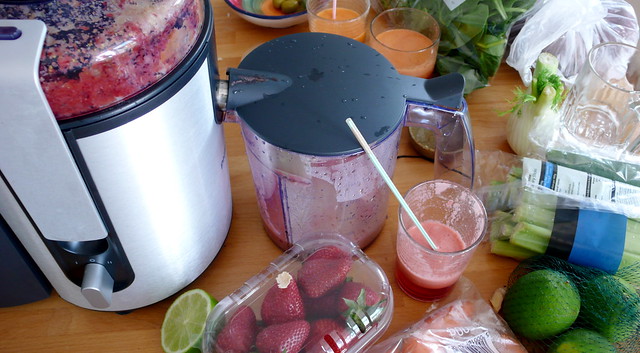
Juicing is an excellent way to boost your nutrient and vitamin intake while you’re on the go. The following article will provide you with important tips for juicing.
Leafy Greens
If you juice dark, leafy greens like spinach, add some cucumber. Some leafy greens do not taste good. Cucumber will overpower this and make the drink tastier. Using cucumbers with the peel on will add a lot of nutritional value to your juice.
Some very effective ingredients for juicing concoctions are chard, parsley, broccoli, kale and spinach. You should aim for juices that are comprised of between 50 and 70 percent greens. The addition of other fruits and veggies is simply to add more flavor. Fruit juice generally contains more sugar than the juice from greens and usually isn’t as healthy for you.
Use the colors of your fruits and vegetables to help you figure out which nutrients they provide. As well as giving brilliant colors, the many varied vegetables, as well as fruits, are stocked with tons of vitamins and nutrients. This enables a culinary experience that is high on nutrition value and bursting with flavor.
If your kids don’t like vegetables, you can just make them vegetable juice to provide them the nutrients they need. It can be difficult to get children to eat vegetables. You can combine fruits and vegetables into one beverage that has a great taste, and thereby sneak vegetables into a child’s diet by obscuring the fact that they are consuming them through their drink.
Juicing is a great way to stock up your fridge but you should bear in mind that, if you don’t take precautions, refrigeration can cause color changes in the juice. Darker juices are not very appealing, but you can prevent this from happening. A squeeze or two of lemon juice will keep the juice looking nice. The lemon will not be enough to overwhelm the flavor, but will keep things looking fresh.
When purchasing a juicer, chose one that is easy to dismantle and clean. All the time you have to spend assembling your juicer or cleaning it out when you are finished can discourage you from using the juicer at all. Clean your juicer right after using it since moist pulp is easier to get rid of.
Fruits and vegetables contain phytochemicals that can remove any carcinogens from the body. In your juice recipes, incorporate as many fruits and vegetables that are rich in phytochemicals as you possibly can!
The taste of cranberries can be on the bitter side, however. Mix it with the sweeter juices of fruits like berries, oranges and apples. My favorite is a berry blend of strawberries, blueberries, cherries and cranberries! Just be sure to mix and match different combinations to match your particular nutritional needs and flavor preferences.
Your hair and skin can benefit from the nutrients found in cucumber juice. Cucumbers are rich in silica. Apart from strengthening hair and nails, silica is also able to strengthen the body’s connective tissue, and also bones and muscle.
Don’t make your juice too far ahead of when you plan to use it. Ideally you will drink your juice as soon as you make it.
Juicing beetroot, cabbage, or fennel can be a great way to eliminate constipation. Grapes, papaya, figs or other good, cleansing produce. If constipation is something you regularly struggle with, regular juice consumption can help keep your stool soft.
All fruits are very different; remember this when juicing. Certain citrus fruits, such as oranges and tangerines, may require a specialized kind of juicer. If you are juicing melons, you should not mix their juice with that of other fruits, as it will taste bad.
Before you eat your food, you should drink the juice you made. Your body will absorb more vitamins and minerals from the juice when you haven’t eaten for awhile and are feeling empty. This will decrease your hunger and lead to you eating less.
To solidify your healthy juicing habits, make sure your juicer is always within reach, perhaps on a counter in your kitchen. This way, you are reminded daily of the nutrients you are missing by not using your juicing appliance.
When you are choosing vegetables to make into juice, begin with vegetables that have a pleasing taste to you. Your juice does not have to contain the best-known vegetable for a specific vitamin or nutrient if you hate the taste of the vegetable. Find other vegetables that you like to eat that offer similar nutrients and vitamins to the vegetable you don’t like to eat. By juicing vegetables that you enjoy eating, you will ensure that you will enjoy the taste of the juice.
As mentioned in the beginning of the article, juicing is a great way to get nutrients while on the go. You can consume the vitamins from fruits and vegetables by juicing. By following the advice from this article, you will see how enjoyable juicing can be.